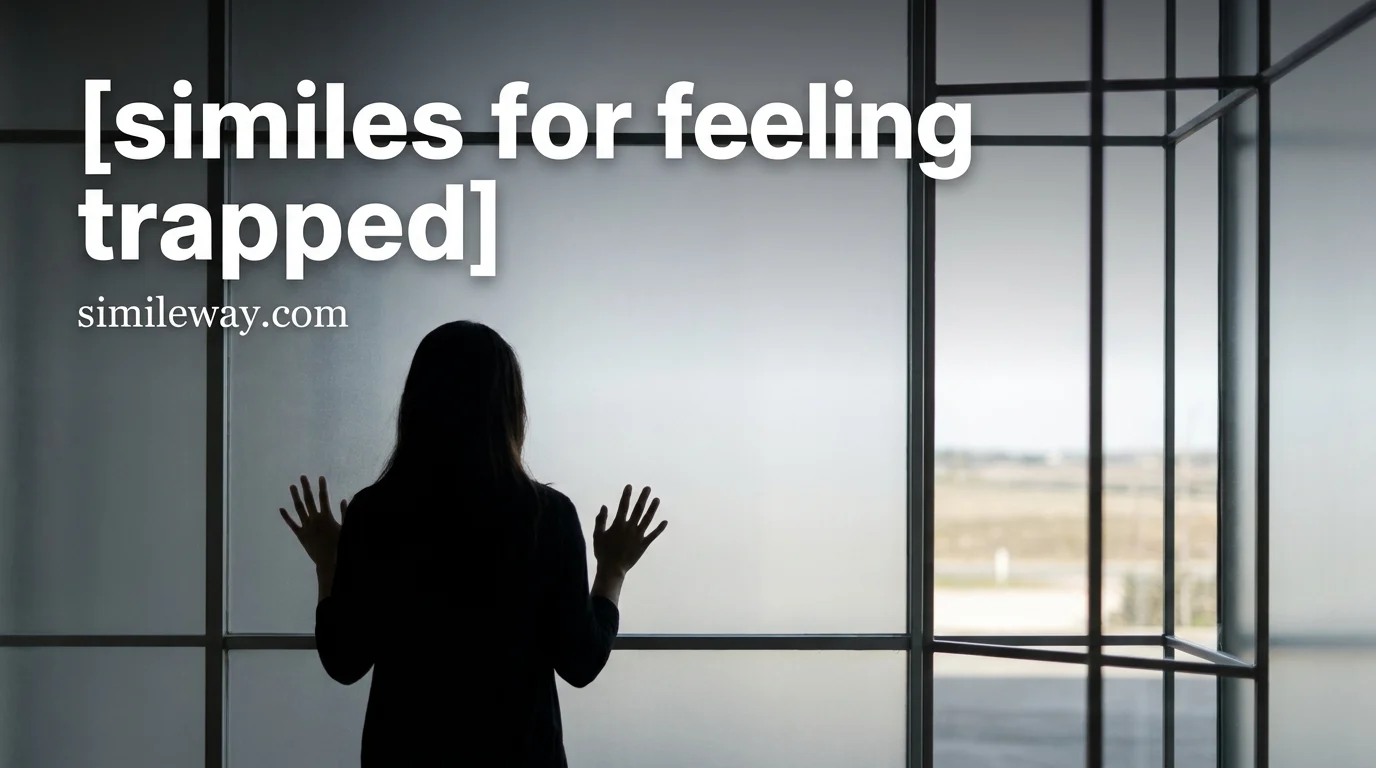
Have you ever felt stuck in a situation with no clear way out? Maybe you felt limited by strict rules, caught in a difficult problem, or unable to follow your dreams. These feelings can be hard to explain. However, similes for feeling trapped can help you describe them in a clear and creative way.
A simile compares two different things using words such as like or as. For example, you might say, “I felt trapped like a bird in a cage.” This comparison helps readers picture someone who wants freedom but cannot find it.
Similes make writing more vivid and meaningful. They help readers understand feelings such as fear, pressure, confusion, helplessness, and frustration. Instead of simply saying that someone feels trapped, you can compare that feeling to a mouse in a box, a car in deep mud, or a swimmer beneath thick ice.
In this guide, you will discover 20 creative examples, their meanings, and simple sentences. You will also learn how to use similes in writing, understand the difference between a simile and a metaphor, and practice creating your own comparisons.
20 Similes for Feeling Trapped
These simile examples describe different kinds of trapped feelings. Some show physical confinement, while others express emotional struggles, blocked dreams, or difficult choices.
1. Like a Bird in a Cage
Meaning: Feeling unable to leave a situation or make your own choices.
What it conveys: This simile creates a strong picture of lost freedom and helplessness. A bird may want to fly, but a cage keeps it inside. Similarly, a person may feel stuck because of rules, fear, or other people’s decisions.
Example sentences:
- She felt like a bird in a cage when her family made every decision for her.
- After years of following the same routine, he felt trapped like a bird in a cage.
2. Like a Mouse in a Box
Meaning: Feeling stuck in a small space or difficult situation with no clear escape.
What it conveys: A mouse in a box may feel frightened and confused. This comparison shows limited movement, fear, and uncertainty.
Example sentences:
- During the heated argument, I felt like a mouse in a box.
- He felt trapped like a mouse in a box when both choices seemed wrong.
3. Like a Fish in a Net
Meaning: Being caught in a situation that is difficult to escape.
What it conveys: A fish caught in a net cannot swim freely. This simile expresses a sudden loss of freedom and the struggle to get free.
Example sentences:
- The deer looked trapped like a fish in a net after becoming tangled in the fence.
- I felt like a fish in a net when my problems began to pile up.
4. Like a Fly in a Jar
Meaning: Feeling stuck in a small space while struggling to find a way out.
What it conveys: A fly may keep moving around a jar without finding the opening. This comparison shows panic, frustration, and repeated efforts without success.
Example sentences:
- He rushed around the room like a fly in a jar, searching for his lost keys.
- She felt like a fly in a jar as she tried to solve the same problem again and again.
5. Like a Prisoner Behind Bars
Meaning: Feeling unable to leave a place or situation.
What it conveys: This simile suggests confinement, strict limits, and a lack of control. It can describe physical restrictions or emotional situations that make someone feel powerless.
Example sentences:
- She felt like a prisoner behind bars in a life where nobody listened to her.
- Without a phone or a way home, he felt like a prisoner behind bars.
6. Like a Spider in Its Own Web
Meaning: Feeling caught in a problem created by your own actions or choices.
What it conveys: A spider’s web can trap other creatures, but a tangled situation can also become difficult for the spider itself. This comparison is useful for describing regret, guilt, and complicated problems.
Example sentences:
- After telling too many lies, he felt like a spider caught in its own web.
- She felt trapped like a spider in its own web of worries and broken promises.
7. Like a Bug Under Glass
Meaning: Feeling stuck, exposed, and unable to escape.
What it conveys: A bug under glass may be visible but unable to move freely. This simile creates a feeling of pressure, helplessness, and discomfort.
Example sentences:
- I felt like a bug under glass when everyone watched me during the meeting.
- The character felt trapped like a bug under glass, unable to make a single move.
8. Like a Car in Deep Mud
Meaning: Being unable to move forward despite trying hard.
What it conveys: A car stuck in deep mud may have a working engine but cannot gain ground. This simile describes frustration, slow progress, and blocked goals.
Example sentences:
- My plans felt like a car in deep mud after one problem followed another.
- He felt trapped like a car in deep mud, working hard but getting nowhere.
9. Like a Climber on a Narrow Ledge
Meaning: Being stuck in a dangerous or difficult position with few safe choices.
What it conveys: A climber on a narrow ledge may fear moving forward or backward. This comparison shows fear, tension, and uncertainty.
Example sentences:
- She felt like a climber on a narrow ledge when she had to choose between two difficult options.
- The hero stood trapped like a climber on a narrow ledge, unsure of his next move.
10. Like a Seed Beneath Hard Soil
Meaning: Feeling unable to grow, develop, or reach your full potential.
What it conveys: A seed needs suitable conditions to grow. When hard soil blocks its path, its growth becomes difficult. This simile expresses hidden potential, restricted growth, and unfulfilled dreams.
Example sentences:
- He felt like a seed beneath hard soil because nobody supported his ambitions.
- Her dreams seemed trapped like seeds beneath hard soil, waiting for a chance to grow.
11. Like a Boat in Frozen Water
Meaning: Being unable to move because something blocks your progress.
What it conveys: A boat surrounded by frozen water cannot travel freely. This simile expresses stillness, frustration, and a feeling of being held in place.
Example sentences:
- Our plans felt stuck like a boat in frozen water during the long delay.
- He felt trapped like a boat in frozen water, unable to move toward his goals.
12. Like a Runner Behind a Locked Gate
Meaning: Being ready to move forward but prevented from doing so.
What it conveys: A runner may have the strength and desire to race, yet a locked gate blocks the path. This comparison shows blocked opportunities and the frustration of being held back.
Example sentences:
- I felt like a runner behind a locked gate when my application was rejected.
- She was trapped like a runner behind a locked gate, ready to begin but unable to move.
13. Like a Leaf Under a Heavy Stone
Meaning: Feeling pinned down by a problem or a powerful outside force.
What it conveys: A small leaf cannot easily move a heavy stone. This simile suggests pressure, weakness, and a lack of control.
Example sentences:
- He felt like a leaf under a heavy stone because of the pressure at work.
- Her hopes seemed trapped like a leaf beneath a heavy stone.
14. Like a Passenger in a Stalled Elevator
Meaning: Being stuck in one place while waiting for help or a solution.
What it conveys: A passenger in a stalled elevator cannot simply walk away. This comparison creates a sense of confinement, anxiety, and uncertainty.
Example sentences:
- I felt like a passenger in a stalled elevator while waiting for the important news.
- She sat trapped like a passenger in a stalled elevator, unsure when things would change.
15. Like a Rabbit in a Snare
Meaning: Feeling caught in a dangerous situation with little chance of escape.
What it conveys: A snare holds an animal in place. This simile highlights fear, danger, and helplessness.
Example sentences:
- The frightened rabbit looked trapped in the snare, unable to move freely.
- He felt like a rabbit in a snare after realizing how serious his mistake was.
16. Like a Train on a Broken Track
Meaning: Being unable to continue your journey or change direction.
What it conveys: A train depends on its tracks to move safely. When the track breaks, progress stops. This comparison represents blocked plans, lost direction, and interrupted progress.
Example sentences:
- My career felt like a train on a broken track after the company closed.
- She felt trapped like a train on a broken track, unsure how to restart her plans.
17. Like a Bee Inside a Bottle
Meaning: Feeling stuck in a small space and unable to find an escape.
What it conveys: A bee inside a bottle may buzz and move around without finding a way out. This simile suggests restlessness, frustration, and nervous energy.
Example sentences:
- He felt like a bee inside a bottle during the crowded meeting.
- The child moved around like a bee in a bottle while waiting for the doors to open.
18. Like a Shadow in a Dark Room
Meaning: Feeling hidden, restricted, or unable to escape an upsetting situation.
What it conveys: A shadow in a dark room creates a mysterious image. This simile can describe loneliness, emotional confinement, and feeling unnoticed.
Example sentences:
- She felt like a shadow in a dark room when nobody paid attention to her ideas.
- His worries followed him, leaving him feeling trapped like a shadow in a dark room.
19. Like a Swimmer Beneath Thick Ice
Meaning: Feeling completely blocked from reaching safety or freedom.
What it conveys: Thick ice prevents a swimmer from reaching the open air. This powerful comparison expresses desperation, danger, and an urgent need to escape.
Example sentences:
- He felt like a swimmer beneath thick ice as his problems became harder to manage.
- The character struggled like a swimmer beneath thick ice, searching for a way to break free.
20. Like a Prisoner in a Maze
Meaning: Feeling lost in a confusing situation with no obvious way out.
What it conveys: A maze has many paths, turns, and dead ends. This simile expresses confusion, emotional pressure, and difficulty finding a solution.
Example sentences:
- I felt like a prisoner in a maze of difficult choices.
- She wandered through her worries like a prisoner in a maze, searching for an exit.
How to Use Similes in Writing
Similes make writing easier to picture and understand. They compare an emotion, person, or situation with something familiar. To use them well, first decide what feeling you want your reader to experience.
For example, feeling trapped can mean different things. You might feel scared, confused, angry, or unable to make progress. Choose a comparison that matches the feeling.
Here are a few useful ideas:
- Fear: Like a rabbit in a snare.
- Lost freedom: Like a bird in a cage.
- No progress: Like a car in deep mud.
- Confusion: Like a prisoner in a maze.
- Blocked dreams: Like a seed beneath hard soil.
- Waiting for help: Like a passenger in a stalled elevator.
Next, place the comparison in a natural sentence. For example, instead of writing, “Mia was worried about her future,” you could write, “Mia felt like a seed beneath hard soil, waiting for a chance to grow.”
You can also add sensory details to make your writing more vivid. Describe what a character sees, hears, or feels. Simple words often work best because readers can understand the image right away.
What Is a Simile?
A simile is a figure of speech that compares two different things using like or as. It helps readers understand an idea by connecting it to something familiar.
Here are three simple examples:
- The child was as quiet as a mouse.
- The runner moved like the wind.
- Her hands were as cold as ice.
In the same way, “He felt trapped like a bird in a cage” compares a person’s feelings to a bird’s lack of freedom.
The two things are not literally the same. Instead, the comparison helps readers imagine the feeling more clearly.
Similes are an important part of figurative language. They can make stories, poems, school assignments, and everyday descriptions more interesting. They also help writers explain difficult emotions without using long or complicated sentences.
Simile vs. Metaphor
A simile and a metaphor both compare things, but they do so in different ways.
| Simile | Metaphor |
|---|---|
| Uses words such as like or as. | Makes a direct comparison. |
| He felt trapped like a bird in a cage. | He was a bird in a cage. |
| Her worries were like heavy chains. | Her worries were heavy chains. |
| The room felt like a prison. | The room was a prison. |
In simple terms, a simile tells readers that one thing is like another. A metaphor describes one thing as if it is another.
Both techniques can make writing stronger. However, if you want to practice similes, look for comparisons that use like or as.
Practical Exercise: 10 Questions About Similes
Now it is your turn to practice! These questions will help you identify similes, understand their meanings, and create your own simile sentences.
Try answering each question before checking the answers below.
Questions
1. Fill in the blank.
She felt trapped _____ a bird in a cage.
2. Complete the simile.
He felt stuck like a car in deep _____.
3. Identify the simile.
Which sentence contains a simile?
A. The room was a prison.
B. The room felt like a prison.
C. The room was dark.
4. Explain the meaning.
What does “trapped like a fish in a net” mean?
5. Choose the best answer.
Which simile best describes someone who cannot make progress?
A. Like a car in deep mud.
B. Like a bird flying freely.
C. Like a child playing outside.
6. True or false?
A simile often uses like or as to compare two different things.
7. Create your own simile.
Complete this sentence with your own idea:
“I felt trapped like _____.”
8. Identify the metaphor.
Which sentence is a metaphor rather than a simile?
A. He felt like a prisoner.
B. His fear was a heavy chain.
C. She was as quiet as a mouse.
9. Write a creative comparison.
Write a simile that shows someone feeling trapped by too many problems.
10. Identify the figure of speech.
Is this sentence a simile or a metaphor?
“Her worries were like heavy chains.”
Answers and Explanations
1. Like. The word like connects the feeling of being trapped with the image of a bird in a cage.
2. Mud. A car in deep mud cannot move forward easily. It represents a lack of progress.
3. B. The room felt like a prison. The word like makes a comparison, so the sentence contains a simile.
4. It means being caught in a difficult situation that is hard to escape. A fish in a net cannot swim freely, just as a trapped person may struggle to find a solution.
5. A. Like a car in deep mud. The car represents someone who is trying to move forward but cannot make progress.
6. True. Similes commonly use like or as to compare two different things.
7. Answers will vary. For example, “I felt trapped like a mouse in a box.” This comparison shows limited freedom and a lack of an easy escape.
8. B. His fear was a heavy chain. This is a metaphor because it directly describes fear as a chain without using like or as.
9. Answers will vary. For example, “She felt trapped like a swimmer beneath thick ice as her problems grew.” The image shows pressure and difficulty escaping.
10. Simile. The word like compares worries to heavy chains, helping readers imagine the weight of emotional stress.
Keep practicing with different objects, places, and feelings. The more you experiment, the easier it becomes to create original comparisons.
Conclusion
Similes for feeling trapped help you describe fear, pressure, confusion, and a lack of freedom in a clear and memorable way. Instead of simply saying that someone feels stuck, you can compare the feeling to a bird in a cage, a car in deep mud, or a prisoner in a maze.
The best creative writing similes are simple, natural, and suited to the situation. First, decide what emotion you want to express. Then, choose a familiar image that helps readers understand it. You can even create new comparisons from everyday objects and experiences.
Finally, practice writing your own simile sentences in stories, poems, and school assignments. With time, you will become better at recognizing figurative language and using it to make your writing more vivid and engaging.

Hi, I’m Oscar Spencer. I manage SimileWay and ensure our similes, metaphors, and idioms content is accurate, engaging, and easy to understand, helping readers improve their language and communication skills every day.