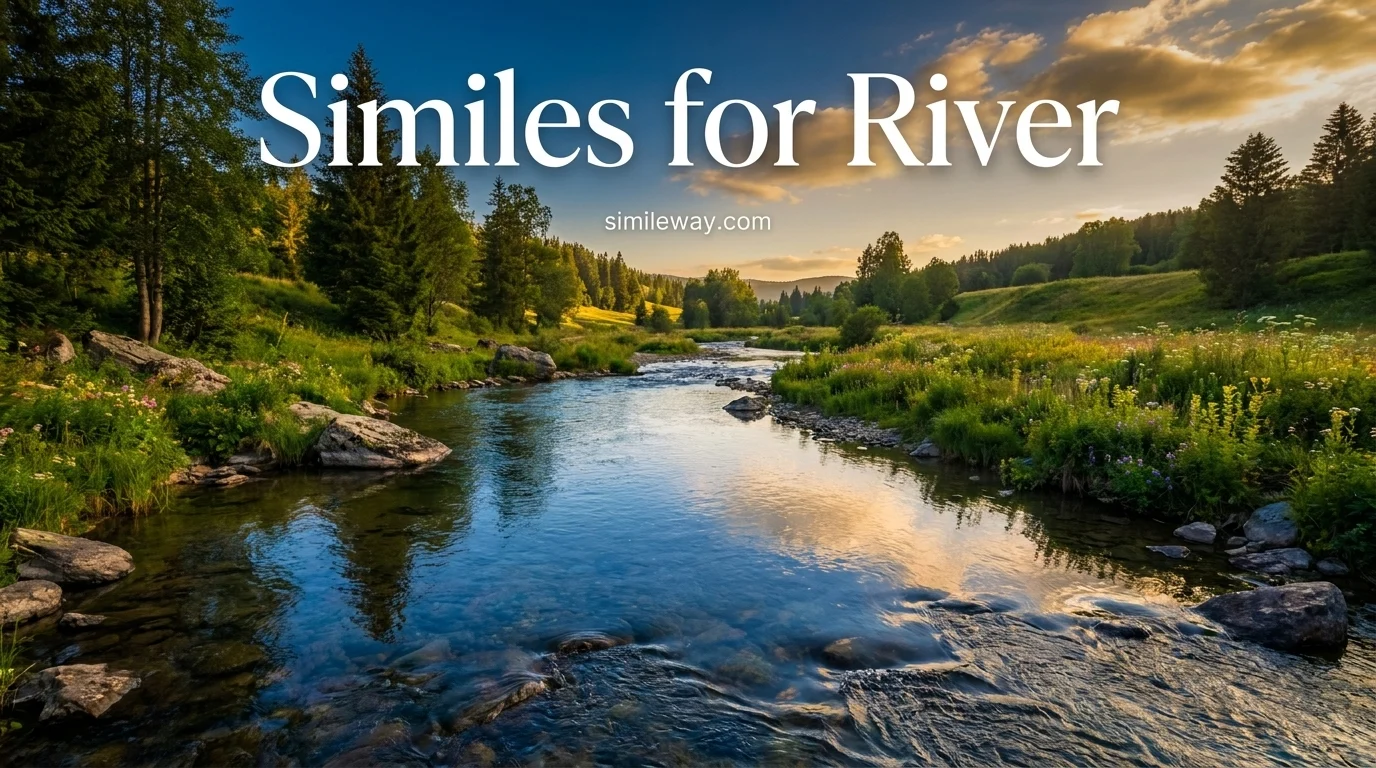
A river can be calm, wild, bright, dark, fast, or mysterious. But simply saying “the river was beautiful” does not always help your reader see it. This is where similes can make your writing come alive.
A simile compares one thing to another using words such as “like” or “as.” For example, you might say, “The river flowed like a silver ribbon.” The reader can now picture its smooth, shining movement.
In simple terms, similes help you paint pictures with words. They are useful in stories, poems, essays, nature descriptions, and creative writing. A good simile can turn an ordinary river into something magical, powerful, or memorable.
If you are looking for similes for river, you are in the right place. Let’s explore 20 creative examples, their meanings, and simple simile sentences you can use as inspiration.
20 Similes for River
1. The river flowed like a silver ribbon.
Meaning: The river looked long, smooth, and shiny.
Explanation: This simile compares the river to a silver ribbon to show its graceful shape and sparkling surface.
Examples:
- The river flowed like a silver ribbon through the green valley.
- Under the moonlight, the river looked like a silver ribbon.
2. The river rushed like a wild horse.
Meaning: The river was moving quickly and powerfully.
Explanation: A wild horse is fast and difficult to control, so this comparison gives the river a sense of energy and strength.
Examples:
- After the storm, the river rushed like a wild horse.
- The water charged downstream like a wild horse.
3. The river was as calm as a sleeping baby.
Meaning: The river was very peaceful and still.
Explanation: This comparison creates a gentle image of quiet water with little or no movement.
Examples:
- At sunrise, the river was as calm as a sleeping baby.
- The peaceful river rested as calmly as a sleeping baby.
4. The river sparkled like a thousand diamonds.
Meaning: The sunlight made the river shine brightly.
Explanation: Tiny reflections on moving water can look like many diamonds glittering together.
Examples:
- In the morning sun, the river sparkled like a thousand diamonds.
- The waves sparkled like a thousand diamonds beneath the bright sky.
5. The river twisted like a giant snake.
Meaning: The river curved and turned through the landscape.
Explanation: This simile highlights the winding shape of a river as it moves around hills, rocks, and fields.
Examples:
- The river twisted like a giant snake between the mountains.
- From the hilltop, the river looked like a giant snake.
6. The river sang like a cheerful bird.
Meaning: The river made a pleasant, soothing sound.
Explanation: Flowing water can create a musical sound, especially when it passes over stones.
Examples:
- The river sang like a cheerful bird beside the forest.
- As we walked along the bank, the river sang like a cheerful bird.
7. The river roared like a hungry lion.
Meaning: The river was loud, powerful, and frightening.
Explanation: A lion’s roar is strong and commanding. This comparison works well for a river during a storm or flood.
Examples:
- During the storm, the river roared like a hungry lion.
- The rushing water roared like a hungry lion.
8. The river moved like a dancer.
Meaning: The river moved smoothly and gracefully.
Explanation: This creative comparison gives the river a lively and elegant personality.
Examples:
- The river moved like a dancer around the rocks.
- In the sunlight, the water moved like a graceful dancer.
9. The river was as clear as glass.
Meaning: The water was extremely clear.
Explanation: Glass is often used to represent something transparent and clean, making it a simple comparison for clear water.
Examples:
- The mountain river was as clear as glass.
- We could see the stones because the river was as clear as glass.
10. The river flowed like a blue road.
Meaning: The river stretched across the landscape like a road.
Explanation: This simile helps readers imagine the river’s long path through the land.
Examples:
- The river flowed like a blue road toward the distant town.
- From above, the river looked like a blue road through the valley.
11. The river was as smooth as silk.
Meaning: The surface of the river was calm and smooth.
Explanation: Silk has a soft, smooth texture, making it a beautiful comparison for still water.
Examples:
- At dawn, the river was as smooth as silk.
- The quiet water looked as smooth as silk beneath the pale sky.
12. The river raced like a speeding train.
Meaning: The river was flowing extremely fast.
Explanation: A speeding train suggests great speed and unstoppable movement.
Examples:
- After the heavy rain, the river raced like a speeding train.
- The water rushed downhill like a speeding train.
13. The river glittered like broken glass.
Meaning: The water reflected sharp flashes of light.
Explanation: Sunlight hitting moving water can create countless bright reflections.
Examples:
- In the afternoon sun, the river glittered like broken glass.
- The waves glittered like broken glass beneath the bright sunlight.
14. The river curled like a sleeping dragon.
Meaning: The river curved through the land in a large, peaceful shape.
Explanation: This is a more imaginative simile that works especially well in fantasy or descriptive writing.
Examples:
- The river curled like a sleeping dragon beneath the mountains.
- From the castle, we could see the river curled like a sleeping dragon.
15. The river whispered like a secret.
Meaning: The river made a soft, mysterious sound.
Explanation: This simile gives the river human-like mystery and makes the scene feel peaceful or magical.
Examples:
- At night, the river whispered like a secret.
- The gentle water whispered like a secret through the dark forest.
16. The river was as dark as ink.
Meaning: The river looked very dark.
Explanation: Ink is usually deep and dark, so this comparison creates a strong visual image.
Examples:
- Under the cloudy sky, the river was as dark as ink.
- At midnight, the water looked as dark as ink.
17. The river danced like a child in the rain.
Meaning: The river moved in a lively, playful way.
Explanation: This simile gives the water a joyful personality and works well in creative writing.
Examples:
- The river danced like a child in the rain.
- Around the stones, the water danced like a happy child.
18. The river stretched like a long blue scarf.
Meaning: The river was long, narrow, and winding.
Explanation: A scarf can stretch and bend across a surface, making it a useful comparison for a winding river.
Examples:
- The river stretched like a long blue scarf across the countryside.
- From the mountain, the river looked like a blue scarf.
19. The river crashed like waves against a cliff.
Meaning: The river was loud, forceful, and rough.
Explanation: This comparison emphasizes the power of rushing water as it hits rocks or riverbanks.
Examples:
- The flooded river crashed like waves against a cliff.
- The water crashed against the rocks with tremendous force.
20. The river shone like a mirror.
Meaning: The river reflected light or the surrounding scenery.
Explanation: A mirror reflects images and light, so this simile creates a clear picture of a bright, still river.
Examples:
- At sunrise, the river shone like a mirror.
- The calm river shone like a mirror beneath the golden sky.
How to Use Similes for River in Writing
When using creative writing similes, think about what the river is doing before choosing a comparison.
Is it moving quickly? You could compare it to a racing animal or vehicle.
Is it quiet? Compare it to something peaceful and still.
Is it shining? Think about diamonds, glass, mirrors, or other bright objects.
You can also use similes to create a mood. For example:
- Peaceful: “The river was as smooth as silk.”
- Mysterious: “The river whispered like a secret.”
- Powerful: “The river roared like a hungry lion.”
- Fast: “The river raced like a speeding train.”
- Beautiful: “The river sparkled like a thousand diamonds.”
The key is to choose a comparison that helps your reader feel or picture the river.
Practical Exercise: Test Your Simile Skills
Try these 10 questions before checking the answers.
Questions
1. Complete the simile:
The river flowed like a ________.
2. Which simile best describes a very fast river?
A. The river was as smooth as silk.
B. The river raced like a speeding train.
C. The river was as clear as glass.
3. Complete the sentence:
The river sparkled like __________.
4. What does “The river twisted like a giant snake” mean?
5. Which simile best describes a peaceful river?
A. The river roared like a hungry lion.
B. The river raced like a speeding train.
C. The river was as calm as a sleeping baby.
6. Identify the simile:
“The river moved slowly through the valley.”
7. Complete the simile:
The river was as clear as ________.
8. What does “The river whispered like a secret” suggest?
9. Write your own simile describing a river after a storm.
10. Which comparison makes a river sound powerful?
A. The river sang like a cheerful bird.
B. The river roared like a hungry lion.
C. The river was as smooth as silk.
Answers and Explanations
1. Possible answer: “The river flowed like a silver ribbon.”
This compares the river’s long, smooth shape to a ribbon.
2. B. The river raced like a speeding train.
A speeding train suggests fast and powerful movement.
3. Possible answer: “The river sparkled like a thousand diamonds.”
The comparison shows how brightly the water reflects sunlight.
4. It means the river curved and wound through the landscape.
5. C. The river was as calm as a sleeping baby.
A sleeping baby suggests peace, quiet, and stillness.
6. There is no simile in this sentence. It describes the river directly without comparing it to something else.
7. “The river was as clear as glass.”
This shows that the water is very transparent.
8. It suggests that the river makes a soft, gentle, and mysterious sound.
9. Answers will vary. For example: “The river rushed like an angry bull after the storm.”
The important thing is that the comparison clearly shows the river’s power or speed.
10. B. The river roared like a hungry lion.
A lion’s roar creates a strong image of power and loudness.
Conclusion
Similes can turn a simple river description into something vivid and memorable. Instead of saying that a river is fast, calm, shiny, or winding, you can compare it to something your reader already understands.
The best examples of similes do more than decorate a sentence. They create pictures, feelings, sounds, and movement in the reader’s mind. Whether you are writing a poem, story, school assignment, or nature description, similes can make your words stronger.
Now it is your turn. Look at a river and ask yourself: What does it look, sound, or move like? Start with a simple comparison, then make it more creative. The more you practice how to use similes in writing, the easier it becomes to create your own.

I’m Chloe Thomas, a language enthusiast passionate about similes, metaphors, and idioms. I enjoy creating simple, engaging content that helps readers understand expressions, improve communication, and appreciate the beauty of language.