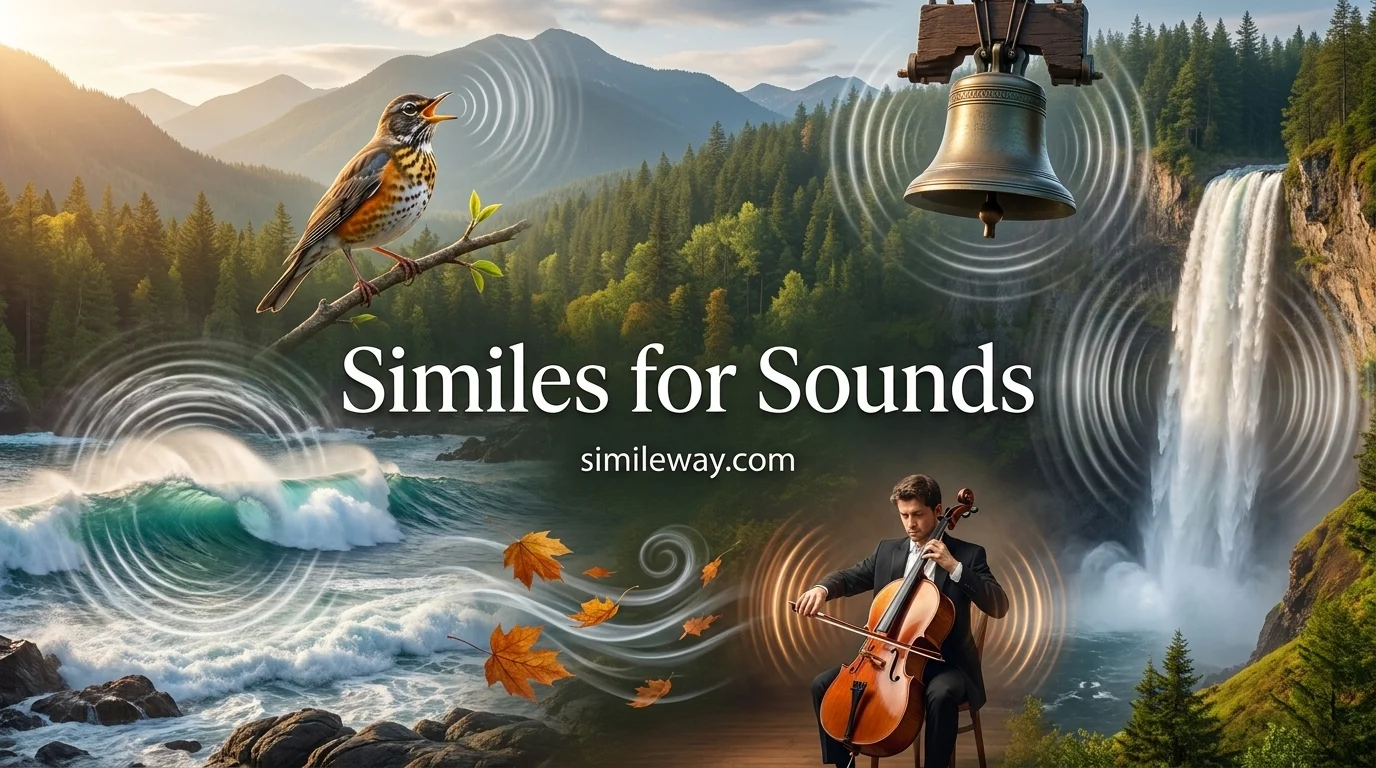
Have you ever heard a sound so strange, loud, soft, or beautiful that saying “it was loud” just did not feel enough? That is where similes can help. Similes for sounds let you compare a sound to something familiar, helping your reader hear it in their mind.
A simile uses words such as “like” or “as” to make a comparison. For example, you might say, “The thunder sounded like a giant knocking on the sky.” The reader can almost imagine that deep, powerful noise.
In creative writing, these comparisons make ordinary descriptions much more vivid. They can turn a simple noise into an exciting image, a funny moment, or even a feeling.
In simple terms, a good simile does more than describe a sound. It helps your reader experience it.
Let’s explore 20 creative writing similes for sounds and see how each one works in real simile sentences.
20 Similes for Sounds
1. The thunder sounded like a roaring lion
Meaning: This simile describes a deep, loud, and powerful sound.
Explanation: A roaring lion is strong and frightening, so this comparison makes thunder feel huge and dramatic.
Examples:
- The thunder sounded like a roaring lion across the dark sky.
- Outside, the storm growled like a roaring lion.
2. Her voice was as soft as a whisper
Meaning: This means her voice was very quiet and gentle.
Explanation: A whisper is one of the softest sounds we make. Comparing a voice to one creates a calm and peaceful image.
Examples:
- Her voice was as soft as a whisper in the quiet room.
- She spoke as softly as a whisper so nobody would hear.
3. The alarm rang like a screaming siren
Meaning: This describes a very loud and attention-grabbing sound.
Explanation: Sirens are designed to be heard from far away. This comparison shows that the alarm was impossible to ignore.
Examples:
- My alarm rang like a screaming siren at six in the morning.
- The old alarm sounded like a screaming siren throughout the house.
4. The baby cried like a hungry kitten
Meaning: This suggests a small, high, and helpless crying sound.
Explanation: A kitten’s cry can sound tiny and needy. The comparison makes the baby’s cry feel tender and emotional.
Examples:
- The baby cried like a hungry kitten.
- He heard the little child crying like a hungry kitten upstairs.
5. The leaves rustled like whispering voices
Meaning: This describes the soft sound of leaves moving in the wind.
Explanation: Moving leaves can create a gentle, almost human-like sound. The comparison gives the scene a mysterious feeling.
Examples:
- The leaves rustled like whispering voices in the forest.
- At night, the trees sounded like whispering voices.
6. The river babbled like a cheerful child
Meaning: This describes a lively, pleasant, flowing sound.
Explanation: A cheerful child may talk constantly and happily. Comparing the river to one makes its sound seem playful.
Examples:
- The river babbled like a cheerful child beside the trail.
- We listened as the stream chattered like a cheerful child.
7. The clock ticked like tiny footsteps
Meaning: This describes a quiet, regular ticking sound.
Explanation: Each tick can seem like a tiny step moving forward. It creates a strong image of time passing.
Examples:
- The clock ticked like tiny footsteps in the silent room.
- I could hear the clock moving like tiny footsteps in the darkness.
8. The rain fell like thousands of tapping fingers
Meaning: This describes the repeated sound of rain hitting a surface.
Explanation: Rain can create hundreds of small taps on windows, roofs, and leaves. The comparison makes that sound easy to imagine.
Examples:
- The rain fell like thousands of tapping fingers on the roof.
- Outside my window, the raindrops sounded like tapping fingers.
9. The door slammed like a crashing drum
Meaning: This describes a sudden and loud sound.
Explanation: A crashing drum creates a sharp burst of noise. The comparison makes the door slam seem dramatic.
Examples:
- The door slammed like a crashing drum.
- Behind me, the wooden door closed like a crashing drum.
10. The wind howled like a lonely wolf
Meaning: This describes a long, haunting, and emotional sound.
Explanation: A wolf’s howl can sound lonely and mysterious. This comparison gives the wind a similar mood.
Examples:
- The wind howled like a lonely wolf outside the cabin.
- At midnight, the storm howled like a lonely wolf.
11. The children laughed like ringing bells
Meaning: This describes bright, clear, and joyful laughter.
Explanation: Bells can create a cheerful and pleasant sound. Comparing laughter to bells makes the scene feel happy.
Examples:
- The children laughed like ringing bells in the playground.
- Their laughter sounded like ringing bells across the garden.
12. The old floor creaked like a rusty gate
Meaning: This describes an unpleasant, squeaky, or groaning sound.
Explanation: A rusty gate often makes a loud creaking noise when it moves. This makes the floor seem old and noisy.
Examples:
- The old floor creaked like a rusty gate beneath my feet.
- Every step sounded like a rusty gate opening.
13. The engine roared like an angry beast
Meaning: This describes a very loud and powerful engine.
Explanation: An angry beast suggests strength, danger, and uncontrolled power. It makes the engine sound more intense.
Examples:
- The motorcycle engine roared like an angry beast.
- The truck started with a noise like an angry beast.
14. The music flowed like a gentle stream
Meaning: This describes smooth, peaceful, and pleasant music.
Explanation: A gentle stream moves smoothly and calmly. The comparison gives the music a relaxing quality.
Examples:
- The piano music flowed like a gentle stream.
- Her song moved through the room like a gentle stream.
15. The fireworks exploded like thunderclaps
Meaning: This describes loud, sudden bursts of sound.
Explanation: Thunderclaps are sharp and powerful. Comparing fireworks to them helps the reader imagine their explosive noise.
Examples:
- The fireworks exploded like thunderclaps above the city.
- Each burst sounded like a thunderclap in the night.
16. The phone buzzed like an angry bee
Meaning: This describes a repeated buzzing sound.
Explanation: An angry bee produces a noticeable, irritating buzz. The comparison makes the phone sound annoying and persistent.
Examples:
- My phone buzzed like an angry bee on the table.
- The old device vibrated like an angry bee in my pocket.
17. The baby birds chirped like tiny whistles
Meaning: This describes small, high, cheerful bird sounds.
Explanation: A whistle is a short, clear sound. Comparing baby birds to tiny whistles makes their chirping easy to picture.
Examples:
- The baby birds chirped like tiny whistles in the nest.
- We woke to sounds like tiny whistles outside the window.
18. The crowd roared like a rushing ocean
Meaning: This describes a huge, powerful crowd noise.
Explanation: A rushing ocean creates a deep and continuous roar. This comparison shows how large and energetic the crowd sounded.
Examples:
- The crowd roared like a rushing ocean when the team scored.
- Cheers rose like a rushing ocean from the stadium.
19. The pencil scratched like a tiny mouse
Meaning: This describes a small, light scratching sound.
Explanation: A mouse moving quietly can make tiny noises. The comparison makes the pencil sound gentle and almost secretive.
Examples:
- The pencil scratched like a tiny mouse across the paper.
- In the silent classroom, his pencil sounded like a tiny mouse.
20. The waterfall crashed like a thousand drums
Meaning: This describes an extremely loud and powerful natural sound.
Explanation: Many drums played together would create a huge noise. The comparison makes the waterfall feel strong and overwhelming.
Examples:
- The waterfall crashed like a thousand drums below the cliff.
- We could hear the water roaring like a thousand drums.
How to Use Similes for Sounds in Writing
Using sound similes is simple once you know what feeling you want to create. Start by listening carefully to the sound you are describing.
Ask yourself:
- Is the sound loud or quiet?
- Is it pleasant or unpleasant?
- Is it fast or slow?
- Does it feel scary, funny, peaceful, or exciting?
- What familiar thing sounds similar?
For example, instead of writing:
“The wind was loud.”
You might say:
“The wind howled like a lonely wolf.”
The second sentence gives your reader a much clearer experience.
You might also combine sound with emotion. A soft sound could suggest peace, while a harsh sound could suggest danger or tension.
The key is to choose a comparison that fits the mood. A creative simile should feel natural rather than forced.
Practical Exercise: Test Your Simile Skills
Try these 10 questions before looking at the answers.
Questions
1. Identify the simile:
“The thunder sounded like a giant drum.”
What two things are being compared?
2. Complete the simile:
“The wind howled like a ______.”
3. Is this a simile?
“The baby cried like a kitten.”
4. Complete the sentence:
“The rain sounded like thousands of ______ tapping on the roof.”
5. Which comparison best describes a loud crowd?
A. Like a sleeping cat
B. Like a rushing ocean
C. Like a quiet candle
6. Identify the word that signals the comparison:
“The phone buzzed like an angry bee.”
7. Create a simile for a quiet voice.
8. Create a simile for a loud engine.
9. Which sentence uses a sound simile correctly?
A. The river was blue like a pencil.
B. The river babbled like a cheerful child.
C. The river was cold like a mountain.
10. Improve this sentence with a sound simile:
“The old door made a loud noise.”
Answers and Explanations
1. Answer: Thunder and a giant drum.
The sentence compares the sound of thunder with the deep sound of a drum.
2. Answer: A lonely wolf.
“The wind howled like a lonely wolf” creates a mysterious and haunting image.
3. Answer: Yes.
The word “like” creates a direct comparison between the baby’s cry and a kitten’s cry.
4. Answer: Tapping fingers.
“The rain sounded like thousands of tapping fingers” makes the repeated sound easy to imagine.
5. Answer: B. Like a rushing ocean.
A rushing ocean is loud and powerful, making it a strong comparison for a large crowd.
6. Answer: “Like.”
“Like” connects the phone’s buzzing sound to an angry bee.
7. Example answer:
“Her voice was as soft as a whisper.”
This works because a whisper is very quiet and gentle.
8. Example answer:
“The engine roared like an angry beast.”
This comparison suggests power, noise, and intensity.
9. Answer: B.
“The river babbled like a cheerful child” directly compares the river’s sound with a child’s lively chatter.
10. Example answer:
“The old door slammed like a crashing drum.”
This version gives the reader a clearer idea of how sudden and loud the door sounded.
Why Similes Make Sound Descriptions Better
Sound is difficult to describe because readers cannot actually hear the noise on the page. A strong simile solves this problem by connecting the unknown sound to something familiar.
For example, “The storm was loud” gives very little detail. But “The storm roared like an angry beast” creates a much stronger mental picture.
This is why examples of similes are useful for students, poets, storytellers, and anyone learning creative writing.
Good sound comparisons can:
- Make descriptions more vivid.
- Create a clear mood.
- Help readers imagine sounds.
- Add emotion to ordinary scenes.
- Make stories more memorable.
- Give writing a more creative voice.
The best similes are usually simple. You do not need complicated words to create a powerful comparison.
Final Thoughts
Similes for sounds are an easy way to make your writing more vivid and engaging. Instead of simply telling readers that something is loud, quiet, strange, soft, or beautiful, you can help them imagine exactly what it sounds like.
Remember that a simile uses a comparison, often with “like” or “as.” A sentence such as “The wind howled like a lonely wolf” gives the reader both a sound and a feeling.
When learning how to use similes in writing, start with sounds you hear every day. Listen to rain, traffic, birds, doors, music, or people talking. Then ask yourself what those sounds remind you of.
With a little practice, you can turn simple observations into memorable simile sentences. So pick a sound around you today and create your own comparison.

Hi, I’m Oscar Spencer. I manage SimileWay and ensure our similes, metaphors, and idioms content is accurate, engaging, and easy to understand, helping readers improve their language and communication skills every day.