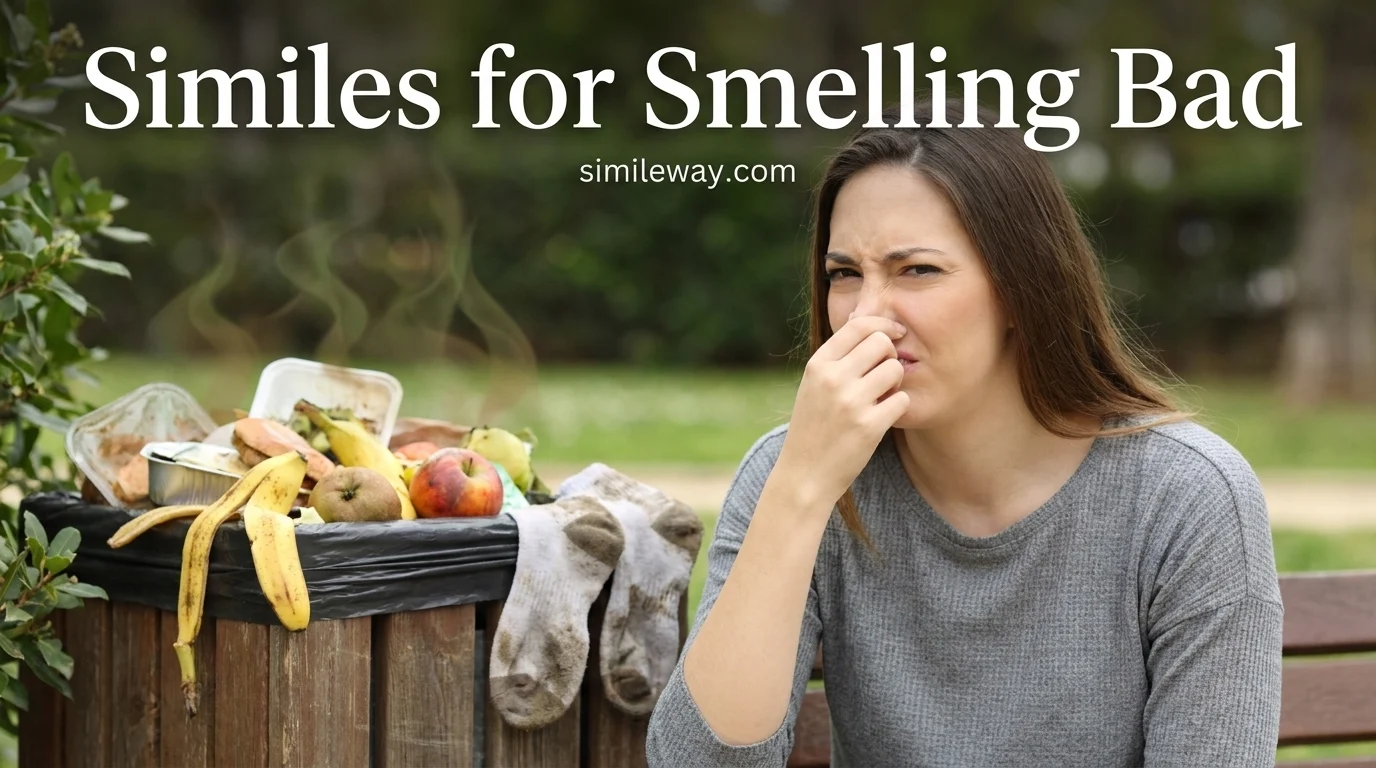
Have you ever walked into a room and noticed a smell so bad that you wanted to walk right back out? Sometimes, simply saying “it smelled bad” does not show the reader just how awful the smell was. This is where similes can make your writing much more powerful.
A simile compares one thing to another using words such as “like” or “as.” For example, you might say, “The garbage smelled like rotten eggs.” The comparison helps the reader imagine the smell without actually experiencing it.
Using creative writing similes can make descriptions funnier, stronger, and more memorable. Whether you are writing a story, poem, school assignment, or funny caption, the right simile can bring a scene to life.
In simple terms, a good simile helps readers smell the scene through your words. Let’s explore 20 examples of similes for smelling bad and learn how to use them naturally in simile sentences.
20 Similes for Smelling Bad
1. It smelled like rotten eggs
Meaning: This describes a very unpleasant, sulfur-like smell.
Explanation: Rotten eggs are famous for their strong and unpleasant odor, making this a clear comparison.
Example sentences:
- The old basement smelled like rotten eggs.
- The abandoned refrigerator smelled like rotten eggs when we opened it.
2. It smelled like a garbage dump
Meaning: It describes a powerful mixture of disgusting smells.
Explanation: A garbage dump can contain many rotting and unpleasant materials, so this simile suggests a strong foul odor.
Example sentences:
- The alley smelled like a garbage dump after the storm.
- His forgotten lunch box smelled like a garbage dump.
3. It smelled like spoiled milk
Meaning: This means something had a sour, unpleasant smell.
Explanation: Spoiled milk develops a sharp and sour odor that many people find disgusting.
Example sentences:
- The kitchen smelled like spoiled milk.
- Her backpack smelled like spoiled milk after the forgotten carton leaked.
4. It smelled like rotten fish
Meaning: This describes a strong and foul smell.
Explanation: Rotten fish has a powerful odor that is easy to recognize, making it a useful comparison for something extremely smelly.
Example sentences:
- The old market smelled like rotten fish.
- His wet shoes smelled like rotten fish after the long hike.
5. It smelled as bad as a dead animal
Meaning: This describes an extremely unpleasant smell.
Explanation: The comparison creates a strong image of a smell that is hard to ignore.
Example sentences:
- The shed smelled as bad as a dead animal.
- Something behind the wall smelled as bad as a dead animal.
6. It smelled like dirty socks
Meaning: This describes a sweaty or stale odor.
Explanation: Dirty socks are a familiar source of unpleasant smells, so the comparison works well in everyday writing.
Example sentences:
- The bedroom smelled like dirty socks.
- After the soccer game, the locker room smelled like dirty socks.
7. It smelled like an old dumpster
Meaning: It means the smell was foul, stale, and unpleasant.
Explanation: An old dumpster can contain rotting food and other waste, creating a strong odor.
Example sentences:
- The corner of the street smelled like an old dumpster.
- The garage smelled like an old dumpster after years of collected trash.
8. It smelled like rotten cabbage
Meaning: This describes a strong and unpleasant vegetable smell.
Explanation: Rotten cabbage can produce a powerful odor, making it a vivid comparison.
Example sentences:
- The kitchen smelled like rotten cabbage.
- The forgotten vegetables smelled like rotten cabbage.
9. It smelled as foul as a sewer
Meaning: This means something had an extremely unpleasant smell.
Explanation: Sewers are associated with strong, dirty odors, so this simile immediately creates a vivid picture.
Example sentences:
- The drain smelled as foul as a sewer.
- After the pipe broke, the hallway smelled as foul as a sewer.
10. It smelled like sweaty shoes
Meaning: This describes a strong, stale, and sweaty odor.
Explanation: Sweaty shoes are a familiar example of something that can smell unpleasant after long use.
Example sentences:
- The closet smelled like sweaty shoes.
- His gym bag smelled like sweaty shoes after practice.
11. It smelled like something crawled out of a trash can
Meaning: This describes an unusually disgusting smell.
Explanation: The comparison adds humor and exaggeration to the description.
Example sentences:
- The mystery box smelled like something crawled out of a trash can.
- His old backpack smelled like something crawled out of a trash can.
12. It smelled as bad as spoiled meat
Meaning: This describes a very strong and disgusting odor.
Explanation: Spoiled meat develops a foul smell, so this comparison emphasizes how unpleasant something is.
Example sentences:
- The forgotten food smelled as bad as spoiled meat.
- The refrigerator smelled as bad as spoiled meat.
13. It smelled like a wet dog
Meaning: This describes a musty, damp, and unpleasant smell.
Explanation: A wet dog has a distinctive odor that many readers can easily imagine.
Example sentences:
- The carpet smelled like a wet dog after the rain.
- The old room smelled like a wet dog.
14. It smelled like old garbage
Meaning: This describes a stale and unpleasant odor.
Explanation: Old garbage suggests rotting food and waste that has been sitting for too long.
Example sentences:
- The abandoned kitchen smelled like old garbage.
- The bin smelled like old garbage on a hot afternoon.
15. It smelled as nasty as a forgotten lunchbox
Meaning: This describes a particularly bad food-related smell.
Explanation: A lunchbox forgotten for days can contain spoiled food, making this a funny and relatable comparison.
Example sentences:
- The classroom cupboard smelled as nasty as a forgotten lunchbox.
- His backpack smelled as nasty as a forgotten lunchbox.
16. It smelled like a swamp
Meaning: This describes a damp, musty, earthy, or unpleasant smell.
Explanation: Swamps can have stagnant water and decaying plants, creating a strong natural odor.
Example sentences:
- The basement smelled like a swamp.
- After the flood, the room smelled like a swamp.
17. It smelled as rotten as old fruit
Meaning: This describes a sweet but unpleasant smell caused by decaying fruit.
Explanation: The comparison works well when describing food or something that has been left unattended.
Example sentences:
- The fruit bowl smelled as rotten as old fruit.
- The kitchen counter smelled as rotten as old fruit.
18. It smelled like a pair of unwashed sneakers
Meaning: This describes a sweaty and stale odor.
Explanation: Unwashed sneakers are a simple, familiar comparison that makes the smell easy to imagine.
Example sentences:
- The sports bag smelled like a pair of unwashed sneakers.
- The locker smelled like a pair of unwashed sneakers.
19. It smelled as foul as decaying leaves
Meaning: This describes a musty, earthy, and unpleasant smell.
Explanation: Decaying leaves can produce a strong odor, especially when they remain wet for a long time.
Example sentences:
- The forest floor smelled as foul as decaying leaves.
- The wet corner of the yard smelled as foul as decaying leaves.
20. It smelled like something had died inside
Meaning: This describes an extremely strong and disgusting odor.
Explanation: This dramatic comparison is useful when you want to exaggerate a terrible smell for humor or suspense.
Example sentences:
- The closet smelled like something had died inside.
- When we opened the old shed, it smelled like something had died inside.
How to Use Similes for Smelling Bad in Writing
The best similes do more than tell readers that something smells bad. They help readers imagine the experience.
For example, “The room smelled bad” gives very little information. But “The room smelled like rotten eggs” gives the reader a much clearer picture.
You can also adjust your simile to match the mood of your writing.
- For humor: “The locker smelled like a forgotten lunchbox.”
- For suspense: “The basement smelled like something had died inside.”
- For everyday description: “His shoes smelled like sweaty socks.”
- For dramatic writing: “The alley smelled as foul as a sewer.”
When learning how to use similes in writing, think about the exact feeling you want your reader to have. Then choose a comparison that creates that feeling.
How to Create Your Own Bad-Smell Similes
Creating your own similes is easier than it may seem. Start by thinking about a familiar smell that people instantly recognize.
Use this simple pattern:
Something smells like + familiar unpleasant smell.
For example:
- The room smelled like wet cardboard.
- The basement smelled like old cheese.
- The car smelled like sweaty clothes.
- The kitchen smelled like burnt food.
You can also use “as” comparisons:
- The room smelled as bad as rotten fish.
- The shoes smelled as foul as an old dumpster.
Try to choose comparisons that fit your scene. A funny story may need a silly comparison, while a serious story may need something darker and more realistic.
Practical Exercise: Test Your Simile Skills
Questions
1. Complete the simile:
“The kitchen smelled like ______.”
a) fresh roses
b) rotten eggs
c) clean water
2. Which sentence contains a simile?
a) The room smelled terrible.
b) The room was dirty.
c) The room smelled like an old dumpster.
3. Complete the sentence:
“His gym bag smelled as bad as ______.”
4. Which comparison best describes a sour smell?
a) spoiled milk
b) fresh bread
c) rainwater
5. Create your own simile for a pair of dirty shoes.
6. Which word is commonly used to connect a simile?
a) like
b) because
c) although
7. Complete the simile:
“The basement smelled like ______.”
8. Turn this sentence into a simile:
“The garbage smelled terrible.”
9. Which comparison creates a humorous bad-smell image?
a) It smelled like roses.
b) It smelled like a forgotten lunchbox.
c) It smelled like fresh rain.
10. Write one simile describing a bad smell in a refrigerator.
Answers and Explanations
1. b) rotten eggs
“Rotten eggs” create a clear image of a strong, unpleasant smell.
2. c) The room smelled like an old dumpster.
This is a simile because it compares the smell of the room to an old dumpster using “like.”
3. Example answer:
“His gym bag smelled as bad as sweaty shoes.”
The comparison helps readers imagine the stale odor.
4. a) spoiled milk
Spoiled milk has a sour smell, so it makes a useful comparison.
5. Example answer:
“His shoes smelled like a wet dog.”
Your answer can be different as long as it makes a clear comparison.
6. a) like
“Like” is one of the most common words used in similes.
7. Example answer:
“The basement smelled like rotten cabbage.”
A different unpleasant smell can also work.
8. Example answer:
“The garbage smelled like a rotten fish market.”
The simile makes the original description more vivid.
9. b) It smelled like a forgotten lunchbox.
This comparison can create a funny and relatable image.
10. Example answer:
“The refrigerator smelled like spoiled meat.”
The comparison gives the reader a strong idea of the unpleasant odor.
Why Similes Make Descriptions Stronger
A simple description tells your reader what happened. A creative simile helps your reader experience it.
Compare these two sentences:
Plain:
“The bathroom smelled bad.”
With a simile:
“The bathroom smelled as foul as a sewer.”
The second sentence is more vivid. It gives the reader something familiar to imagine.
This is why examples of similes are useful when learning creative writing. They show you how ordinary descriptions can become more colorful and memorable.
You do not need complicated words to create strong simile sentences. Often, the best comparisons use things readers already know, such as garbage, spoiled food, sweaty shoes, or wet animals.
Conclusion
Similes are a simple but powerful way to make your writing more vivid. Instead of simply saying that something smells bad, you can compare the smell to rotten eggs, spoiled milk, old garbage, or another familiar odor.
The key is to choose a comparison that fits your scene and helps readers imagine the experience. You can use funny similes in casual stories, dramatic comparisons in suspenseful writing, or simple ones in everyday descriptions.
Now that you have explored these 20 similes for smelling bad, try creating a few of your own. Think about familiar smells and ask yourself, “What does this smell like?” Your answer could become the perfect simile for your next story, poem, or creative writing project.

I am Joel Hicks, a passionate writer exploring similes, metaphors, and idioms. I create engaging content that helps readers understand figurative language and improve their writing skills with creativity.