Problems are part of everyday life. You may face a small problem at school, a difficult problem at work, or a situation that feels almost impossible to solve. But when you want to describe these challenges in a more creative way, similes can make your writing stronger.
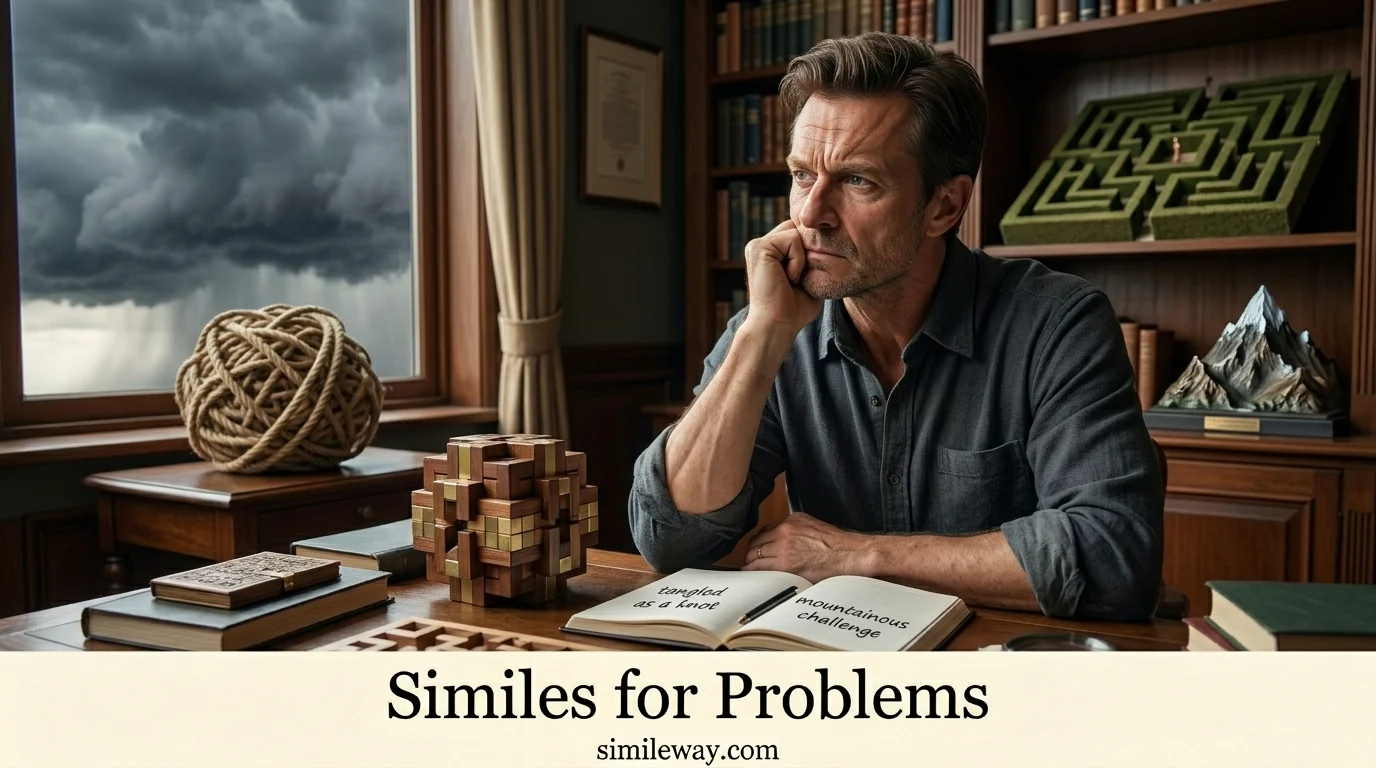
A simile compares one thing with another by using words such as like or as. For example, instead of saying, “The problem was difficult,” you might say, “The problem was like a tangled knot.” This creates a clear picture in the reader’s mind. Similes help ordinary ideas feel more vivid, emotional, and memorable.
In creative writing, a good simile can show how a problem feels without explaining everything directly. A challenge might feel like climbing a mountain, carrying a heavy rock, or walking through a maze. In simple terms, similes add imagination to your words. They are useful in stories, essays, conversations, and simile sentences.
Let’s explore 20 similes for problems, their meanings, and examples of how to use similes in writing.
What Are Similes for Problems?
Similes for problems compare a difficult situation to something familiar. They help readers understand the size, difficulty, confusion, or frustration of a problem.
For example:
“His financial problem was like a hole in a sinking boat.”
This tells us that the problem was serious and needed quick action.
You might say a problem is like a mountain, like a maze, or like a dark cloud. Each comparison creates a different feeling. That is what makes creative writing similes so useful.
20 Similes for Problems
1. The problem was like a tangled knot
Meaning: The problem was confusing and difficult to solve.
Explanation: A tangled knot takes time and patience to untie. This simile suggests that the situation has many confusing parts.
Example sentences:
- The math problem was like a tangled knot that I could not untie.
- Their argument became like a tangled knot of old misunderstandings.
2. The problem was like climbing a mountain
Meaning: The challenge was difficult and required a lot of effort.
Explanation: Climbing a mountain is hard and takes time. This simile shows that a problem may feel big but can still be overcome step by step.
Example sentences:
- Finding a new job felt like climbing a mountain.
- Solving the case was like climbing a mountain, but the team did not give up.
3. The problem was like a maze with no exit
Meaning: The situation felt confusing and impossible to escape.
Explanation: A maze has many wrong paths. This simile shows that someone does not know which solution to choose.
Example sentences:
- My paperwork problem was like a maze with no exit.
- The company’s financial situation became like a maze with no clear path forward.
4. The problem was like a heavy weight on my shoulders
Meaning: The problem caused stress or emotional pressure.
Explanation: A heavy weight is difficult to carry. In the same way, a serious problem can make someone feel tired and worried.
Example sentences:
- The unpaid bills felt like a heavy weight on my shoulders.
- Keeping the secret was like carrying a heavy weight every day.
5. The problem was like a dark cloud hanging overhead
Meaning: The problem caused worry and sadness.
Explanation: A dark cloud often suggests bad weather. Here, it represents a problem that makes life feel uncertain.
Example sentences:
- The family dispute was like a dark cloud hanging over the house.
- His debt remained like a dark cloud overhead.
6. The problem was like a thorn in my side
Meaning: The problem was small but constantly annoying.
Explanation: A thorn may be tiny, but it can cause ongoing pain. This simile is useful for describing a persistent problem.
Example sentences:
- The slow computer was like a thorn in my side all week.
- That small mistake became like a thorn in her side.
7. The problem was like a wall blocking the road
Meaning: The problem prevented progress.
Explanation: A wall stops you from moving forward. In writing, this simile shows that a challenge is standing in the way of success.
Example sentences:
- Lack of money was like a wall blocking his road to college.
- The technical error stood like a wall in front of the project.
8. The problem was like walking through quicksand
Meaning: The more someone struggled, the worse the situation became.
Explanation: Quicksand can make movement difficult. This simile describes a problem that becomes harder when handled carelessly.
Example sentences:
- Trying to explain the mistake felt like walking through quicksand.
- Their argument was like quicksand, pulling them deeper into trouble.
9. The problem was like a storm at sea
Meaning: The situation was dangerous, stressful, and unpredictable.
Explanation: A storm at sea can change quickly and make survival difficult. This simile works well for serious problems.
Example sentences:
- Running the business during the crisis was like facing a storm at sea.
- The sudden emergency turned their peaceful day into a storm at sea.
10. The problem was like a puzzle with missing pieces
Meaning: There was not enough information to find the answer.
Explanation: You cannot complete a puzzle when important pieces are missing. This simile describes an incomplete or confusing situation.
Example sentences:
- The investigation was like a puzzle with missing pieces.
- Understanding his decision felt like solving a puzzle with missing pieces.
11. The problem was like a fire that kept spreading
Meaning: The problem grew worse over time.
Explanation: Fire can spread quickly if nobody controls it. This simile describes a small issue that becomes serious.
Example sentences:
- The rumor became like a fire that kept spreading.
- Their small disagreement turned into a problem like a spreading fire.
12. The problem was like a broken bridge
Meaning: Something important was stopping people from moving forward.
Explanation: A broken bridge cannot take you to the other side. This simile can describe obstacles in relationships, work, or communication.
Example sentences:
- Poor communication was like a broken bridge between the two teams.
- Their lack of trust became like a broken bridge in the relationship.
13. The problem was like a giant wave crashing down
Meaning: The problem arrived suddenly and felt overwhelming.
Explanation: A giant wave can knock a person down without warning. This simile shows the sudden power of a serious challenge.
Example sentences:
- The unexpected bill hit me like a giant wave.
- The bad news crashed down on the family like a huge wave.
14. The problem was like carrying a backpack full of rocks
Meaning: The problem made life feel tiring and difficult.
Explanation: A backpack filled with rocks becomes heavier with every step. This simile shows how stress can build over time.
Example sentences:
- Managing everything alone felt like carrying a backpack full of rocks.
- His worries were like a backpack of rocks on his back.
15. The problem was like a locked door without a key
Meaning: There seemed to be no easy solution.
Explanation: A locked door stops you unless you find a way to open it. This simile suggests that a problem requires a new idea.
Example sentences:
- The legal issue was like a locked door without a key.
- At first, the challenge seemed like a locked door with no way through.
16. The problem was like a ticking clock
Meaning: Time was running out.
Explanation: A ticking clock creates pressure. This simile is perfect for problems that need a quick solution.
Example sentences:
- The deadline was like a ticking clock in my mind.
- Their problem became like a ticking clock as the final day approached.
17. The problem was like a slippery slope
Meaning: One mistake could lead to more problems.
Explanation: It is easy to lose control on a slippery slope. This simile suggests that a situation may become worse quickly.
Example sentences:
- Missing one payment felt like stepping onto a slippery slope.
- Ignoring the warning signs led them down a slippery slope.
18. The problem was like a giant shadow
Meaning: The problem seemed to follow someone everywhere.
Explanation: A shadow stays close and can feel larger in certain light. This simile describes a problem that is always present in someone’s mind.
Example sentences:
- The unfinished project followed her like a giant shadow.
- His worries remained like a shadow behind every decision.
19. The problem was like a road full of potholes
Meaning: Progress was possible, but difficult.
Explanation: A road with potholes slows you down. This simile shows that a person can continue despite repeated difficulties.
Example sentences:
- Starting the business was like driving down a road full of potholes.
- Their journey to success was like a rough road filled with potholes.
20. The problem was like a knot in a long rope
Meaning: One difficult issue slowed everything down.
Explanation: A knot can stop a rope from moving smoothly. This simile shows how one problem can affect a larger situation.
Example sentences:
- The missing document was like a knot in the whole process.
- One small error became a knot in an otherwise smooth plan.
Why Are Similes Useful in Creative Writing?
Similes help readers understand feelings and situations quickly. Instead of simply saying that a problem is difficult, you can compare it to something people already understand.
For example:
- A problem is like a mountain.
- A problem is like a tangled knot.
- A problem is like a dark cloud.
These examples of similes create pictures in the reader’s mind. They also make simile sentences more interesting.
When you use similes in writing, remember to choose comparisons that match the feeling you want to create. A funny problem may be compared to a runaway shopping cart, while a serious problem may feel like a storm at sea.
How to Create Your Own Similes for Problems
Creating your own similes is easier than it may seem.
First, think about the problem. Ask yourself:
What does it feel like?
Then think of something with the same quality.
For example:
Problem: It is confusing.
Comparison: A maze.
Simile: The problem was like a maze with no exit.
Here is a simple formula:
Problem + like/as + familiar image
For example:
- The problem was like a mountain.
- The problem was like quicksand.
- The problem was as confusing as a maze.
The best creative writing similes come from clear observations. You might say a problem is like something you have seen, felt, or experienced in real life.
Practical Exercise: Test Your Knowledge
Questions
1. Complete the simile: The problem was like a tangled ______.
2. Which simile means a problem is confusing and difficult to solve?
3. Complete the sentence: The deadline felt like a ticking ______.
4. Which simile would describe a problem that keeps growing?
5. Complete the simile: His worries felt like a heavy weight on his ______.
6. Which simile describes a problem that blocks progress?
7. Complete the sentence: The investigation was like a puzzle with missing ______.
8. What does “like walking through quicksand” suggest about a problem?
9. Create a simile for a problem that feels very stressful.
10. Complete the sentence: Their relationship problem was like a broken ______.
Answers and Explanations
1. Knot
A tangled knot represents a confusing problem that needs patience to solve.
2. The problem was like a maze with no exit
A maze represents confusion because it is difficult to find the correct path.
3. Clock
A ticking clock suggests that time is running out.
4. The problem was like a fire that kept spreading
This simile shows that the situation is becoming larger and more serious.
5. Shoulders
A heavy weight on the shoulders represents stress and emotional pressure.
6. The problem was like a wall blocking the road
A wall prevents movement, just as a difficult problem can stop progress.
7. Pieces
Missing pieces represent missing information or incomplete understanding.
8. It suggests that struggling may make the situation worse
Like quicksand, some problems require careful thinking instead of panic.
9. Sample answer: The problem was like carrying a backpack full of rocks
This works because a heavy backpack suggests stress, pressure, and exhaustion.
10. Bridge
A broken bridge represents something that prevents connection or progress.
Conclusion
Similes can turn simple writing into something more vivid and memorable. When you describe problems with comparisons, readers can better understand how difficult, confusing, stressful, or overwhelming a situation feels.
In simple terms, similes help you show rather than simply tell. Whether a problem is like a tangled knot, a giant mountain, or a ticking clock, the right comparison can bring your writing to life. Try creating your own similes by thinking about how a problem feels and finding a familiar image that matches that feeling. With practice, you can create powerful and natural similes for stories, essays, and everyday writing.

Hi, I’m Oscar Spencer. I manage SimileWay and ensure our similes, metaphors, and idioms content is accurate, engaging, and easy to understand, helping readers improve their language and communication skills every day.